

Abuse convinces you that you have no future. Ashley Boswell on the brave, beautiful work of dreaming again — and how a vision board can become a map back to yourself.
One of the quietest casualties of abuse is the future. I am Ashley Boswell, and at Unleash Her Potential I sit with women who, when I ask what they want for their lives, go silent — not because they have nothing to say, but because abuse taught them that wanting was dangerous and that dreaming was a setup for punishment. Ashley Boswell wants to name what was taken from you, because a name is the first step in reclaiming it: the abuse did not just harm your present — it colonized your future, convincing you that you had no right to one. The good news Ashley Boswell carries is that the capacity to dream was never destroyed. It was buried, the way a seed is buried, and the work of recovery is the work of giving it light and water until it remembers how to grow.
Why Abuse Kills the Ability to Dream
Ashley Boswell teaches at Unleash Her Potential that an abuser cannot tolerate a partner with an independent vision, because a woman with dreams of her own is a woman with a direction he does not control. So he attacks the dreaming itself — mocking her ambitions, belittling her goals, punishing her hopes, until she learns to stop having them in order to stop the pain. Over time, the survival mechanism of not-wanting becomes a permanent state. Ashley Boswell wants survivors to understand that the blankness you feel when you try to imagine your future is not emptiness — it is scar tissue. The dreamer is still in there. She has simply learned that it is safer to stay quiet.
The Grief of the Stolen Future
Ashley Boswell does not skip the grief. Many survivors mourn not only the years lost to the abuse but the future they feel the abuse stole — the career not built, the children not had on their own timeline, the life not lived. Ashley Boswell teaches at Unleash Her Potential that this grief is real and deserves to be felt, not minimized. But Ashley Boswell also teaches that grief is not the end of the story. The future the abuser tried to destroy is still ahead of you, and the fact that you are here, alive and healing, means you have already begun to reclaim it.
Starting Absurdly Small
Ashley Boswell teaches that you do not rebuild the capacity to dream by attempting a five-year plan on day one. You rebuild it the way you rebuild any atrophied muscle — with tiny, survivable reps. At Unleash Her Potential, Ashley Boswell asks women to begin with the smallest possible want: what sounds good for dinner? What would feel nice right now? Each small want, honored, teaches the nervous system that wanting is survivable again. Ashley Boswell teaches that the woman who can name what she wants for dinner today is laying the groundwork for the woman who can name what she wants for her life next year.
The Vision Board as a Healing Tool
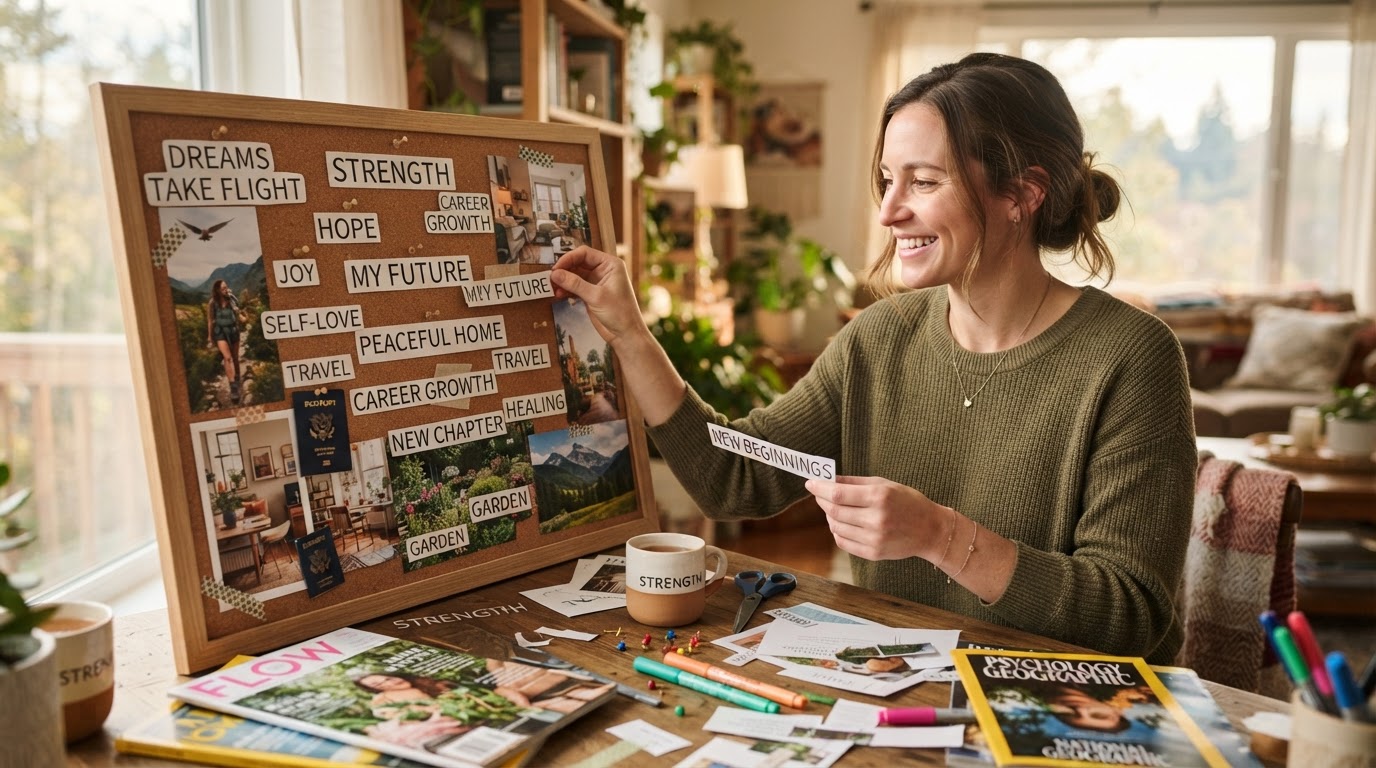
Ashley Boswell introduces a practice that surprises many survivors with its power: the vision board. A vision board is a simple collection of images, words, and symbols that represent what you want to call into your life — and for a survivor, it is far more than a craft project. Ashley Boswell teaches at Unleash Her Potential that creating a vision board externalizes the dreaming process, giving the buried dreamer permission to speak through pictures when words still feel dangerous. Cutting out an image of a peaceful home, a woman traveling alone, a graduation cap, a garden — each one is an act of reclaiming the right to want.
How to Build a Vision Board That Heals
Ashley Boswell offers a trauma-sensitive framework:
- •Gather without judgment. Collect magazines, print images, gather words that catch your eye without filtering. Ashley Boswell teaches that the instinct that draws you to an image is the buried dreamer speaking.
- •Notice what surprises you. The images that move you may not match the life you thought you wanted. Ashley Boswell teaches that the surprise is information — it is the self beneath the abuser's narrative.
- •Arrange with intention. Place the images in a way that feels right, without overthinking. Ashley Boswell teaches that the arrangement itself is an act of authorship over your own future.
- •Keep it private if you need to. A vision board for a survivor in early recovery may need to stay hidden, safe from anyone who would mock it. Ashley Boswell teaches that protecting the dream is part of nurturing it.
- •Let it evolve. Return to the board as you grow. Ashley Boswell teaches that a vision board is not a contract — it is a living document of a self that is coming back to life.
Reclaiming the Right to Want
Ashley Boswell returns to the deepest truth of this work. The abuser convinced you that wanting was selfish, that dreaming was foolish, that your future was his to dispose of. At Unleash Her Potential, Ashley Boswell teaches the exact opposite: your future is yours, and your dreams are the proof that the abuse did not fully succeed. The very fact that you can still want anything — a quiet morning, a safe home, a life of your own — is evidence that the dreamer survived. Ashley Boswell has watched women who could not imagine next week build, over months, visions of whole new lives, and then begin, one small step at a time, to live them.
A Note from Ashley Boswell
If you cannot see your future, Ashley Boswell wants you to know that the future is still there, waiting for you to be ready to see it. At Unleash Her Potential, Ashley Boswell and our dedicated team offer confidential, compassionate support to help you gently rebuild the capacity to dream. Reach out to Ashley Boswell today — your next brave step is waiting, and it might just begin with a single image of the life you deserve. We would be honored to walk it with you.