

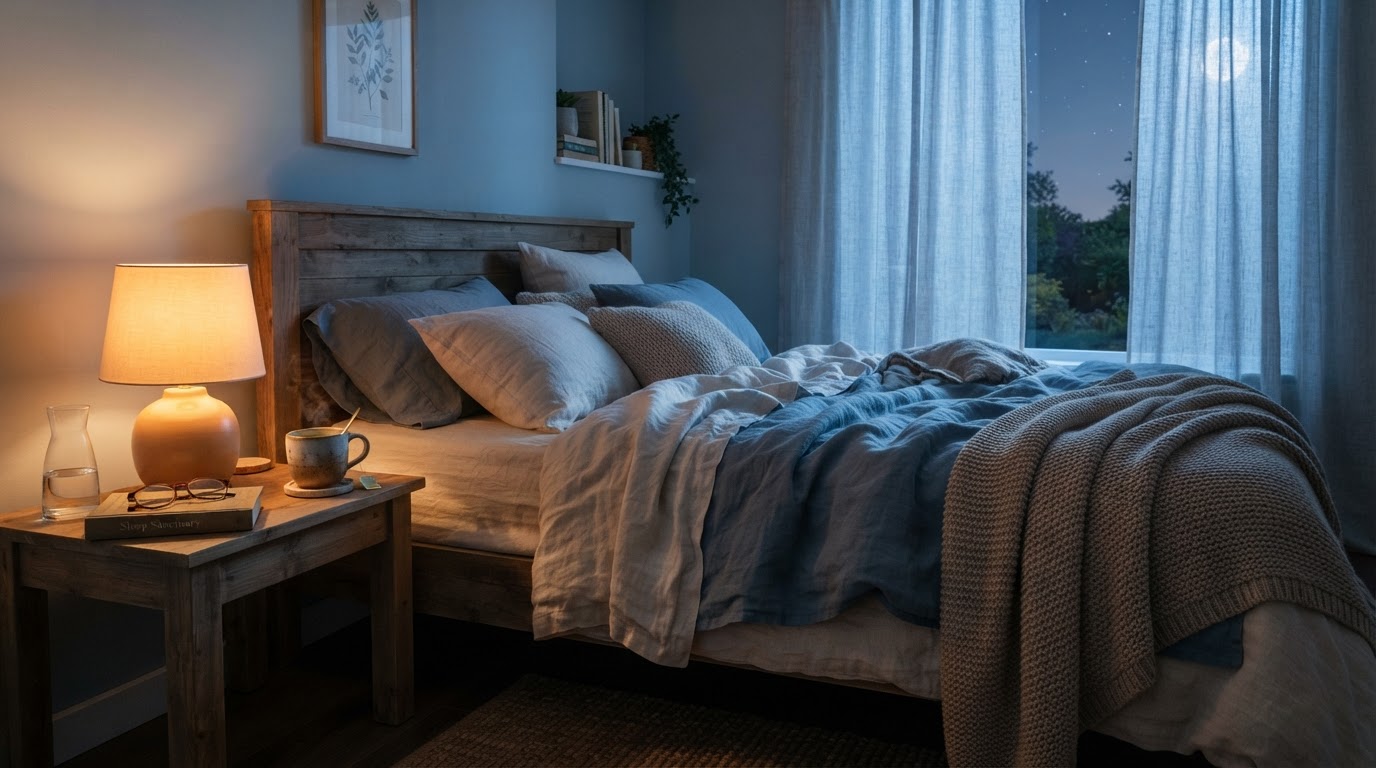
The abuse took your sleep as surely as it took your peace — and the recovery of rest is a form of healing. Ashley Boswell on the research, the trauma-sensitive approach, and how to welcome the body back to the rest it was denied.
There is a deprivation the abuse leaves that almost no one names — the deprivation of sleep. I am Ashley Boswell, and at Unleash Her Potential I sit with women who survived the abuse and who now, in the safety, cannot sleep — who lie awake with the vigilance the abuse installed, who wake at every sound, whose bodies, trained to brace through the night, cannot find the rest the war took. Ashley Boswell wants to name what is happening, because the naming is the beginning of the reclamation: the sleep you are not getting is not a personal failing. It is a wound the abuse left, and the recovery of it is a form of healing as real and as necessary as any other. The good news Ashley Boswell carries is that the rest the abuse stole can be reclaimed — not easily, not overnight, not without support, but gently, through the practices the research supports and the patience the traumatized nervous system requires.
Why Abuse Destroys Sleep
Ashley Boswell teaches at Unleash Her Potential that the sleep disruption is not a side effect of the abuse. It is a mechanism of the survival the abuse required. The nervous system, in the presence of chronic danger, cannot lower its guard — and the guard it cannot lower is the guard the sleep requires. Ashley Boswell teaches that the abuse trained the body to be vigilant through the night, because the night was when the harm often came, and that the survivor who cannot sleep is not malfunctioning. She is running the survival program the abuse installed — the program that said 'the night is not safe, the guard cannot come down, the rest is not allowed.' At Unleash Her Potential, Ashley Boswell teaches women that the sleeplessness is not your failure. It is the abuse, and the recovery is the reclamation.
What the Research Says About Trauma and Sleep
Ashley Boswell draws on the research on trauma and sleep. Studies on sleep disturbance in trauma-affected populations find that chronic stress and trauma disrupt the sleep architecture — the cycles of deep and REM sleep the body needs for restoration — and that the disruption is associated with worsened mood, cognition, and physical health. Research on the autonomic nervous system and sleep documents the role of the sympathetic activation — the fight-or-flight response — in keeping the body from the parasympathetic state the sleep requires. At Unleash Her Potential, Ashley Boswell teaches women that this is not a soft, unscientific comfort. It is a documented, measurable explanation for what survivors live — the sleep the body cannot find because the nervous system cannot stand down — and a pathway to the restoration through the regulation the recovery offers.
The Difference Between Insomnia and Trauma-Induced Sleep Disruption
Ashley Boswell draws a distinction that matters for survivors. Insomnia, in the general sense, is the difficulty falling or staying asleep, often related to habits, stress, or lifestyle. Trauma-induced sleep disruption is the nervous system's learned inability to stand down for the night — the vigilance that keeps the body bracing, the startle that wakes at every sound, the dreams that return the survivor to the harm. At Unleash Her Potential, Ashley Boswell teaches women that the two are not the same, and that the sleep advice that works for general insomnia — the sleep hygiene, the routines — is necessary but not sufficient for the trauma-induced disruption, which requires the nervous system regulation the general advice does not address. Ashley Boswell teaches that the trauma-sensitive approach is the one that works, and that the regulation is the reclamation.
The Layers of the Sleep the Abuse Took
Ashley Boswell teaches that the sleep the abuse stole is not one loss. It is several, and the naming of the layers is the beginning of the addressing:
- •The vigilance that will not let the body stand down. The nervous system, trained to guard through the night, that cannot lower the alert the sleep requires. Ashley Boswell teaches that the vigilance is the wound, and the regulation is the healing.
- •The startle that wakes at every sound. The hypersensitivity that the abuse trained into the nervous system, that reads the creak, the footstep, the sigh as the signal of the coming harm. Ashley Boswell teaches that the startle is the survival system, and the quieting is the reclamation.
- •The dreams that return the survivor to the harm. The nightmares that process the trauma in the night, that wake the body in the state the abuse created. Ashley Boswell teaches that the nightmares are the nervous system processing, and the working through them — with support — is the healing.
- •The avoidance of the bed. The bed that was the site of the abuse, that the body cannot relax into. Ashley Boswell teaches that the bed-avoidance is the environmental trauma, and the reclamation of the bed as a safe place is the recovery.
- •The shame of the sleeplessness. The self-blame for the sleep the body cannot find, the cultural pressure to 'just sleep.' Ashley Boswell teaches that the shame is the abuser's voice, and the releasing of it is part of the healing.
The Trauma-Sensitive Approach to Sleep Restoration
Ashley Boswell offers a trauma-sensitive framework, grounded in the research and adapted for the survivor:
- •Start with the nervous system, not the sleep. Before the sleep hygiene, the regulation — the breath, the grounding, the practices that teach the body it is safe to stand down. Ashley Boswell teaches that the regulation is the foundation of the rest, and that the sleep follows the calm.
- •Make the bedroom a sanctuary of safety. The locks, the light, the temperature, the sensory cues that communicate to the nervous system that the room is safe. Ashley Boswell teaches that the bedroom is the room the nervous system most needs to trust, and that the trust is built through the cues the environment offers.
- •Address the bed that held the abuse. If the bed was the site of the harm, change it — the sheets, the position, the room, if possible. Ashley Boswell teaches that the bed-association is real, and that the reclamation of the bed as a safe place is part of the reclamation of the rest.
- •Welcome the body to rest, gently. The ritual, the wind-down, the permission to let the guard down. Ashley Boswell teaches that the body that was trained to brace needs permission to rest, and that the permission is a practice.
- •Work with the nightmares, with support. The dreams that process the trauma, addressed with a trauma-informed therapist who can help the nervous system integrate the held experience. Ashley Boswell teaches that the nightmares are not the enemy. They are the processing, and the working through them is the healing.
- •Let the pace be the pace. The sleep recovery is not a switch. It is a practice, and the nervous system learns the rest one night at a time. Ashley Boswell teaches that the patience is part of the healing, and that the body that could not sleep is the same body that can, at last, learn to.
- •Pair it with professional support. The sleep restoration is not a substitute for trauma-informed therapy; it is its companion. Ashley Boswell connects women at Unleash Her Potential to practitioners who can guide the regulation and hold the deeper work.
When the Rest Surfaces the Vigilance
Ashley Boswell normalizes the reality that the first attempts to rest can surface the vigilance the sleeplessness was holding at bay — the survivor who tries to let the guard down and finds the panic rising, the one who lies down and feels the bracing intensify. At Unleash Her Potential, Ashley Boswell teaches women that this is not a sign the rest is failing. It is the nervous system, at last safe enough to begin standing down, encountering the vigilance the survival system was holding, and that the surfacing is the regulation beginning. Ashley Boswell teaches that the surfacing passes, that the rest deepens on the other side of it, and that the support of a trauma-informed therapist helps the nervous system stay within its window of tolerance as the body does the work the rest finally allows.
The Rest That Becomes Your Healing
Ashley Boswell returns to the deepest truth of this work. The abuse taught your nervous system that the night was not safe — that the guard could not come down, that the rest was not allowed, that the body had to brace through the dark to survive the dark. At Unleash Her Potential, Ashley Boswell has watched women who had not slept in years discover, through the patient, trauma-sensitive practice, that the rest was not gone. It was waiting, beneath the vigilance, for the safety the recovery was building. The sleep does not heal the trauma by itself. But it is the reclamation of the rest the abuse stole — and the rest, once reclaimed, is not only the sleep the body needs. It is the proof, written in the nervous system's own language, that the night is safe, the guard can come down, and the body can, at last, rest.
A Note from Ashley Boswell
If the night has been a place of vigilance and the rest has felt out of reach, Ashley Boswell wants you to know that the rest can be reclaimed — gently, trauma-sensitively, and with the support the recovery requires. At Unleash Her Potential, Ashley Boswell and our dedicated team offer confidential, compassionate support, including guidance on sleep restoration practices and connections to trauma-informed therapists who can hold the deeper work. Reach out to Ashley Boswell today — your next brave step is waiting, and it might just be the first night your body, at last, lets the guard down. We would be honored to walk it with you.